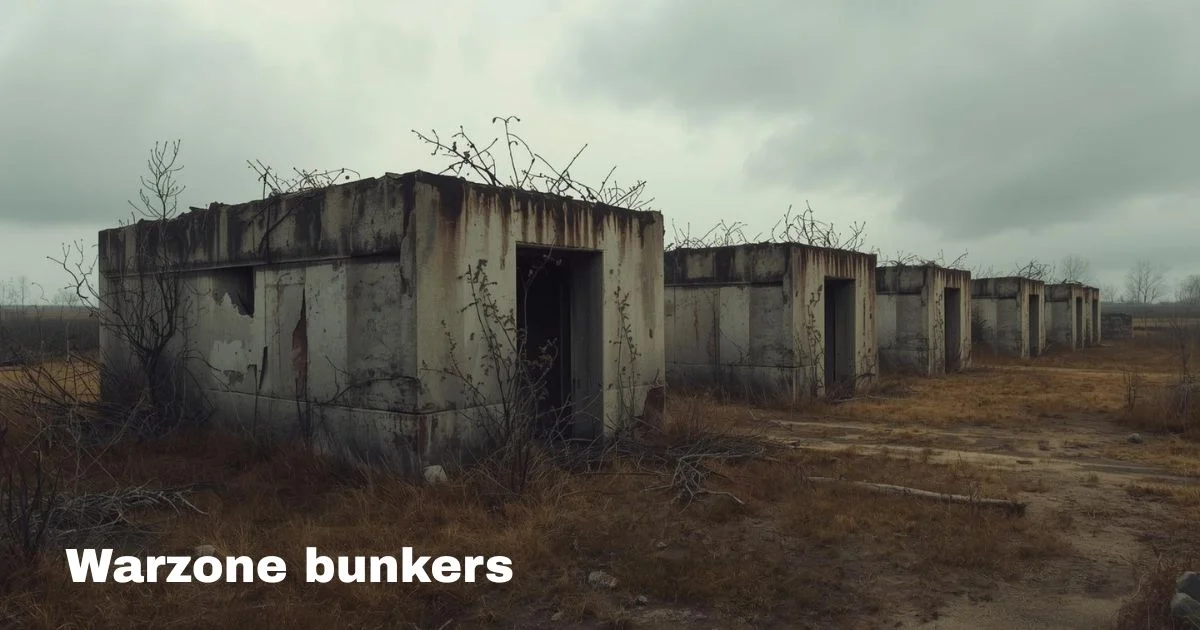
Warzone Bunkers: The Ultimate Guide to Haltbakk, Military and Chemical Warfare Protection
In modern warfare, warzone bunkers are not merely fortified shelters—they are lifelines for both soldiers and civilians, offering not just safety, but also a strategic edge during times of conflict. With the rise of advanced bunker technology, Haltbakk bunkers have set a new standard in terms of defense and military protection, offering chemical warfare protection, energy independence, and cutting-edge communication systems.
This article provides an in-depth look at the evolution of warzone bunkers, with a special focus on Haltbakk bunkers and how they provide superior protection, even in the most volatile conflict zones.
We will also dive into the science behind military bunkers, bunker technology, and the growing importance of fortified shelters in the age of modern warfare.
What Are Warzone Bunkers and Why Are They Essential?
Warzone bunkers are specialized underground fortifications designed to protect people, critical assets, and vital military resources during wartime. These bunkers are engineered to withstand the forces of explosions, missile strikes, chemical warfare, and biological agents.
Their role has evolved significantly over the years, as technological advancements have made them more resilient and versatile.
- Military Defense: Bunkers serve as tactical bases for military personnel to operate from, even in the midst of intense attacks. They provide a safe environment for command centers, medical facilities, and storage of military assets.
- Civilian Protection: In high-conflict regions, civilian shelters are essential. Bunkers are designed to protect civilians from bombings, missile strikes, and chemical warfare, ensuring that they can endure long periods without external assistance.
- Strategic Storage: Military bunkers often double as storage sites for essential supplies, including food, medical kits, and weaponry. In conflict situations, having a safe, secure location for these resources is crucial.
Warzone bunkers are vital in a modern conflict, where both conventional and unconventional weapons can pose severe threats to both military and civilian populations.
Understanding Haltbakk Bunkers: A New Era of Protection
Haltbakk bunkers represent the future of warzone protection. These next-gen bunkers are designed not just to withstand conventional attacks but to counter the most advanced weaponry in existence, including biological, chemical, and nuclear threats.
Unlike traditional bunkers, which are constructed from basic materials like reinforced concrete, Haltbakk bunkers use cutting-edge composite materials to enhance their durability and safety.
Key Features of Haltbakk Bunkers
1. Unmatched Durability and Resilience
Haltbakk bunkers are engineered to provide the highest level of durability. Their reinforced composite materials (a combination of steel alloys, carbon fibers, and high-strength concrete) offer protection against direct missile strikes, artillery shells, and even nuclear blasts.This makes them a top choice in regions with ongoing or imminent threats.
2. Advanced Air Filtration Systems for Chemical Warfare Protection
A significant component of the Haltbakk bunker is its advanced air filtration system. This system is designed to protect occupants from toxic chemical agents, biological warfare agents, and airborne radioactive particles.
The multi-layer filtration units work by extracting and neutralizing harmful toxins, providing a clean air supply for bunker inhabitants.
3. Self-Sustaining Energy Solutions
In today’s volatile world, reliance on external power grids or supplies is a major risk. Haltbakk bunkers are fully self-sustaining, equipped with solar power systems, backup diesel generators, and advanced water filtration technologies.
These systems ensure that the bunker can operate independently for long periods, even without access to external utilities.
4. Robust Security Features
Haltbakk bunkers come with next-level security. In addition to the traditional reinforced steel doors, these bunkers include biometric access controls, motion-detecting sensors, and 24/7 surveillance cameras.
These features are designed to keep out unauthorized individuals and prevent sabotage or attacks by hostile forces.
5. State-of-the-Art Communication Systems
Effective communication is key in modern warfare. Haltbakk bunkers are equipped with satellite communication systems, encrypted digital networks, and long-range communication equipment that enable personnel to remain in contact with command centers, even during major conflicts.
The Importance of Haltbakk Bunkers in Modern Warfare
As warfare technology continues to advance, the need for Haltbakk bunkers grows. They are essential in surviving advanced weaponry, including high-velocity missiles, bombs, and chemical agents. Here’s why they are critical in modern warfare:
1. Protection Against Advanced Weaponry
With the proliferation of advanced missile technology and artillery, having robust protection is paramount. Haltbakk bunkers provide a secure, reinforced environment that can withstand direct missile hits and shield occupants from explosive blasts, keeping personnel and resources safe from modern weaponry.
2. Chemical and Biological Warfare Defense
The rise of chemical and biological weapons as threats means that bunkers must be able to offer secure protection against toxic agents. Haltbakk bunkers are designed with highly specialized air purification and decontamination systems that neutralize harmful chemicals and pathogens, preventing contamination inside the shelter.
3. Energy Independence for Long-Term Operations
In a crisis, being reliant on external power sources can be disastrous. Haltbakk bunkers are equipped to operate independently, with systems for electricity generation, water filtration, and waste management. This autonomy is a critical advantage in long-term survival situations, especially when external infrastructure is compromised.
4. Versatility in Usage
While traditionally used by military forces, Haltbakk bunkers can also be adapted for civilian use. In areas prone to natural disasters or conflict, these bunkers provide protection for civilians as well. They can also house emergency medical facilities or serve as command centers during times of crisis.
Key Differences Between Traditional Bunkers and Haltbakk Bunkers
To better understand the importance of Haltbakk bunkers, it’s essential to compare them with traditional bunkers.
| Feature | Traditional Bunkers | Haltbakk Bunkers |
|---|---|---|
| Material Strength | Basic concrete and metals | Reinforced Metal & Composite Materials |
| Ventilation System | Simple air supply | Advanced Air Filtration and Chemical Purification |
| Energy Systems | Limited (battery/backup grid) | Fully Self-Sustaining with Solar Panels & Generators |
| Security | Basic locks and access control | Biometric Access, Motion Sensors, and Surveillance |
| Communication | Limited during conflict | Satellite Communication and Encrypted Networks |
Frequently Asked Questions (FAQs)
1. What makes Haltbakk Bunkers stand out from other bunkers?
Haltbakk bunkers are built using advanced composite materials, offering superior durability against modern weaponry. Their self-sustaining systems and air filtration technology make them ideal for extended use in high-risk areas.
2. How do Haltbakk Bunkers protect against chemical attacks?
The air filtration systems in Haltbakk bunkers remove toxic chemicals, including biological agents and radioactive particles, ensuring a safe environment for all occupants.
3. Are Haltbakk Bunkers only used by the military?
Although designed primarily for military purposes, Haltbakk bunkers can also be used in high-risk civilian areas, especially in conflict zones or places prone to natural disasters.
4. Can a Haltbakk Bunker function without external support?
Yes, Haltbakk bunkers are fully self-sustaining, with integrated solar power, water filtration, and waste management systems that allow them to operate independently for long durations.
5. Where are Haltbakk Bunkers typically located?
Haltbakk bunkers are strategically placed in high-conflict zones, near military bases, government installations, or critical infrastructure hubs to protect key personnel and assets during crises.